What You’re Actually Deciding Between (And It’s Probably Not What You Think)
The Hidden Reason So Many Decisions Feel Impossible
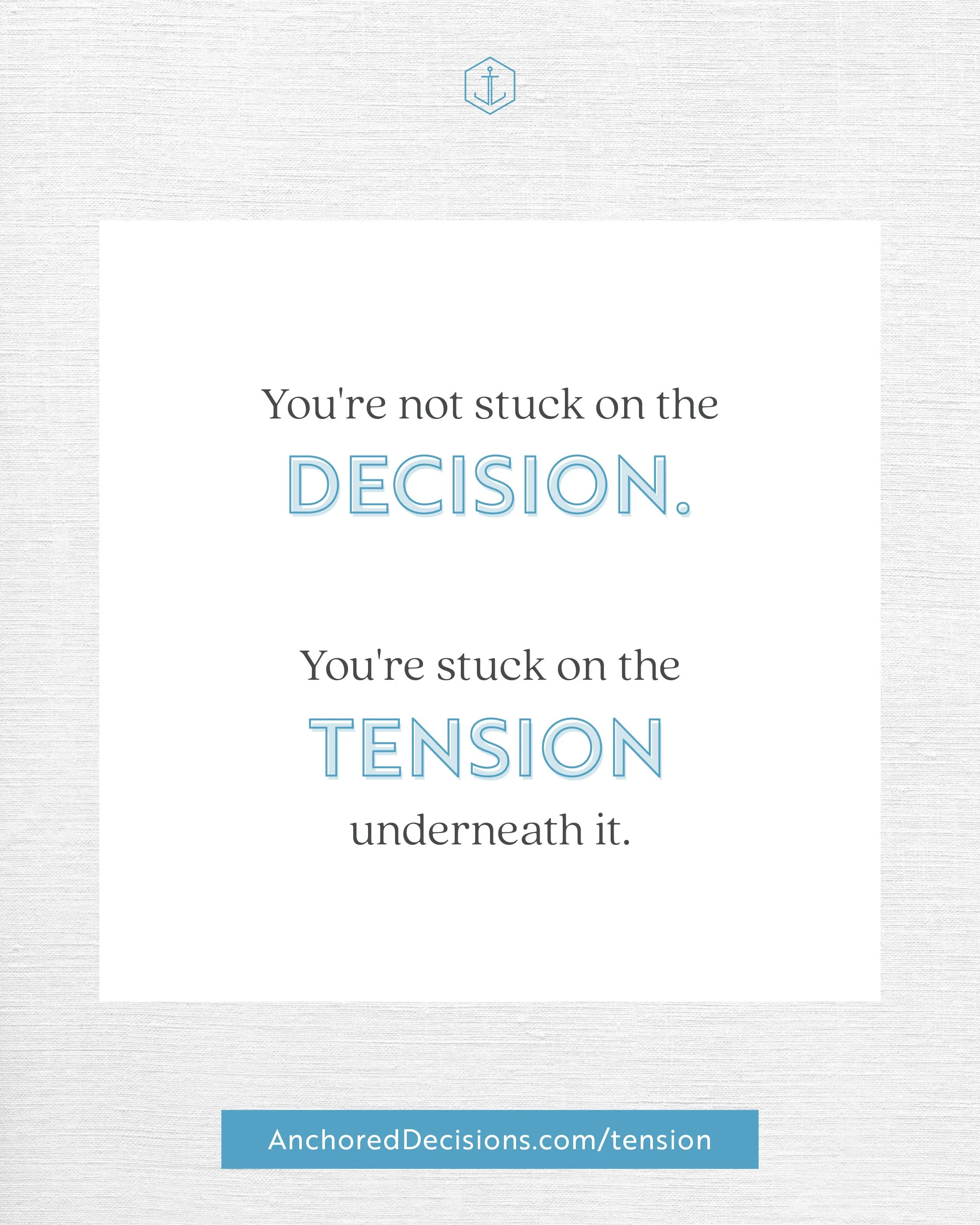
One thing I’ve realized while helping people work through decisions is this: Most people aren’t actually stuck on the decision itself — they’re stuck on the tension underneath it. And until you identify that tension, you’ll keep spinning in circles… because you’ll be trying to solve the wrong problem.
At first glance, decisions usually sound practical:
“Should I quit my job?”
“Should we move?”
“Should I start the business?”
“Should we homeschool?”
“Should I write the book?”
“Should we buy the house?”
But when you dig deeper, the real decision comes down to something else entirely. And that misidentification is what’s keeping you stuck.
What You’re REALLY Deciding Between
When you look under the surface of the decision, you’ll often find there’s a deeper internal conflict you’re really torn between. You’re weighing values, fears, priorities, desires, identity, calling… and there are usually two things you deeply care about pulling against each other.
Whew. No wonder decisions feel so exhausting!
Let’s take a look at a few examples of the internal factors you may be debating between:
Financial Security vs. Family Freedom
Jennifer thinks she’s debating whether or not to quit her job.
She’s burnt out, exhausted, overwhelmed, and desperate for more time with her kids. But leaving her job would also mean financial sacrifice and a completely different lifestyle.
Jennifer isn’t actually deciding whether to quit or stay. She’s deciding between financial security and family freedom. That’s the real tension.
And until she recognizes that, she’ll keep obsessing over job details while never addressing the deeper fear underneath the decision.
Convenience vs. Lifestyle
Haley is torn on whether to move from Downtown Miami to West Palm Beach to be closer to work.
After two years of commuting over an hour each way, she’s exhausted. But she also loves the energy of city life — the restaurants, nightlife, friendships, walkability, and ocean views.
Haley isn’t actually deciding whether to move. She’s deciding between convenience and lifestyle.
Once she understands that, she can stop getting stuck in apartment logistics and start evaluating what matters most to her in this season.
Purpose vs. Comfort
Ashley has been dreaming about writing a book and becoming an author/speaker.
She feels deeply called to encourage women through her story and make an eternal impact. But she’s terrified of the business side of things… and the possibility of failing after investing so much time, money, and energy.
Ashley isn’t really deciding whether to write a book. She’s deciding between purpose and comfort.
That framing changes everything.
Because now the conversation becomes less about publishing logistics and more about fear, calling, obedience, and risk tolerance.
Other Decisions That Aren’t REALLY About the Surface Issue
Sometimes the real decision underneath sounds more like:
Stability vs. adventure
Peace vs. approval
Flexibility vs. prestige
Calling vs. predictability
Safety vs. growth
Logic vs. desire
Short-term comfort vs. long-term impact
Personal fulfillment vs. other people’s expectations
Obedience vs. control
Faith vs. certainty
And honestly? Sometimes neither option is “wrong.” That’s what makes these decisions so difficult. Often, you’re choosing between two good things that simply come with different tradeoffs.
Why This Shift in Framing Matters So Much
1. It helps you identify what’s actually keeping you stuck
A lot of people stay mentally exhausted because they keep trying to gather more information about the surface-level decision.
More research. More opinions. More pros and cons.
But if the real issue is fear, identity, comfort, security, or uncertainty… more information usually won’t solve it.
You can research neighborhoods for six months and still not know whether you value lifestyle or convenience more.
You can compare salaries endlessly and still not know whether your soul can sustain your current pace.
You can outline a book for years and still avoid the deeper fear of vulnerability or failure.
Sometimes the breakthrough comes when you stop asking: “What should I do?” and start asking: “What tension am I actually struggling to resolve?”
2. It helps you clarify what’s at stake
When you identify the real decision, you gain clarity on what each option costs, because every decision has tradeoffs.
Many people get stuck because they subconsciously want an option that gives them:
total peace,
zero sacrifice,
complete certainty,
and all the benefits with none of the downsides.
Unfortunately… that option usually doesn’t exist.
But when you clearly define the deeper tension, you can evaluate the tradeoffs honestly instead of emotionally reacting to surface details.
3. It helps you invite God into the right part of the decision
This is huge. Because often we bring God the logistics while avoiding the heart issue underneath.
We pray:
“Lord, should I move?”
“Should I quit?”
“Should I start the business?”
Meanwhile, the deeper prayer might actually be:
“Lord, am I idolizing comfort?”
“Am I operating out of fear?”
“Am I prioritizing money over what matters most?”
“Am I afraid to trust You?”
“Am I seeking approval more than obedience?”
That’s often where the real transformation happens.
Ask Yourself This One Question
The next time you feel stuck in a decision, take a step back and ask yourself:
“What am I really choosing between here?”
Not the surface-level options. The deeper tension underneath them. Because once you identify that, you can:
understand what’s actually keeping you stuck,
process the emotional and spiritual tension more honestly,
and make decisions with far more clarity and intention.
A Lot of Decisions Aren’t About the WHAT… They’re About the WHY
Sometimes the reason you feel stuck isn’t because you’re bad at decision-making. It’s because you haven’t yet identified the real question your heart is wrestling with.
Next week, I want to dive into another thing people often confuse with the decision itself: The HOW.
Because sometimes we already know what we want to do… We’re just overwhelmed trying to figure out how in the world it would actually work.
The Key to More Aligned Decisions
Once you identify the deeper tension underneath a decision, the next step is getting clear on what should actually guide your choice.
Because when you know your priorities, values, boundaries, and non-negotiables, decisions become far less confusing. Instead of getting pulled in every direction emotionally, you can evaluate your options through a more grounded, intentional, faith-aligned lens.
That’s exactly why I created the free Decision Compass — to help you clarify your foundation so you can make decisions with more confidence, peace, and alignment.